Sada-e-Watan Sydney ™
sadaewatan@gmail.com
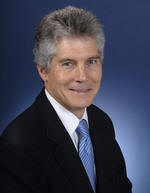
Hon Stephen Smith
Transcripts of Aust FM Stephen Smith Insiders program with Barrie Cassidy
Subjects: Attack on Sri Lankan cricket team, Pakistan, Afghanistan, UN Security Council campaign, Zimbabwe, Malcolm Turnbull
BARRIE CASSIDY, PRESENTER: Now to our program guest.
Pakistan is now the focus for foreign policy practitioners around the world. Until now the Munich Olympic massacre in 1972 appeared to be a one-off, an unprecedented terrorist attack on athletes, but not anymore.
The terrorists last week ambushed the Sri Lankan cricket team in Lahore. They wounded six of them and killed six policemen and two civilians.
To talk about the implications of that we're joined now from Perth by the Minister for Foreign Affairs Stephen Smith. Stephen Smith, good morning, welcome.
STEPHEN SMITH, FOREIGN AFFAIRS MINISTER : Good morning Barrie.
BARRIE CASSIDY: Let's talk about Pakistan. This is a country now surely on the edge. You've got radicalism, you've got terrorism, Afghanistan on its border and a political culture that few people respect.
STEPHEN SMITH: Well I've made the point continuously in recent times and I make it again that I think the threats that we're seeing to Pakistan, both its economic and more importantly in some respects its security threats, the challenges, the threats in these areas to Pakistan are essentially a threat to Pakistan's own existence, an existentialist threat as I I've said, or as I have seen my colleague David Miliband, the UK Foreign Secretary say, this is a mortal threat to Pakistan. I think that assessment is right.
BARRIE CASSIDY: So what can, what should the rest of the world be doing to help?
STEPHEN SMITH: Well it's very important that the international community, including Australia, render Pakistan as much assistance as we can.
Pakistan is a very important strategic country. In south Asia, close to Central Asia, close to the Middle East, it's very important strategically. It's the second largest Muslim populated country in the world. On population projections it will outpace Indonesia in the course of the first half of this century. And of course, it has nuclear weapons.
So it needs the assistance both economic, social, and also security assistance of the international community.
Australia is a founding member of the Friends of a Democratic Pakistan. We joined up at the UN General Assembly in September last year. And it's very important now that the international community I think, led by the United States, renders Pakistan as much assistance as we possibly can on all these fronts.
BARRIE CASSIDY: And do you think the administration there is in that kind of mood that they're ready, willing and able to accept that sort of assistance?
STEPHEN SMITH: The very strong impression I had when I was there two to three weeks ago, before of course this terrible attack on the Sri Lankans, was that from General Kayani, the head of the armed forces up, to my counterpart Foreign Minister Qureshi, to President Zardari, that the penny had dropped; that the terrorist and the militant challenge to Pakistan was not just a challenge now on the Afghanistan-Pakistan border which had implications for Afghanistan, but was very much a threat to Pakistan itself.
And I think that's now the mind set if you like of the senior leadership, both civilian, Government and military, in Pakistan.
The key question will be whether they're in a position to deal with both the economic and the social and the security challenges.
And again as I say in that respect they very much need not just Australia's assistance but the assistance of the international community.
BARRIE CASSIDY: Well if you say the penny has dropped why then did they recently cede control of the Swat Valley to the Taliban? That's not the act of a strong leadership.
STEPHEN SMITH: The point I've made about the so-called Swat deal is I still think we need to see some details emerge of that.
We've seen attempts at provincial level in the Federally Administered Tribal Areas in the North West Frontier Province, attempts at the provincial level to enter into peace agreements with militants. And in the past they haven't succeeded because all they've done is to enable the terrorists, the militants, to regroup and come back even stronger.
President Zardari has not yet signed off on this arrangement and I think that's sensible. I think there's a long way to go before we see whether this proposed arrangement in the Swat Valley is anything other than a precursor to what we've seen in the past, which is respite for the militants who come back even stronger.
So I think we need to be very careful and vigilant in this respect.
BARRIE CASSIDY: Terrorism in the past has been carefully targeted. It's strategic. They try and win public sympathy in certain quarters. But what could've been the motive this time? How could any group imagine an attack on a cricket team would attract anybody to their cause?
STEPHEN SMITH: Well firstly Barrie, can I say, we're still waiting for the exhaustive assessment of who was behind it - both the circumstances of the attack and whatever security lapses or breaches there may have been, but more importantly who's behind it.
I've seen suggestions in the South Asian media that a group called Lashkar-e-Jhangvi, which is a militant group associated with Al Qaeda in the border area of Pakistan and Afghanistan, may have been responsible. Well the jury is out on that I think, but that particular group for example is well regarded as an enemy of the state of Pakistan.
We saw recently provincial elections where Islamic extremist representatives did very poorly. I don't think the people behind this are interested in popular support. I think they're interested in destabilising Pakistan. I think they're interested in doing as much damage as they can in Pakistan, in South Asia, as is possible.
And I think one of the key features of this attack on the Sri Lankan cricket team was in the past there's been a view asserted by some that cricketers would somehow be immune in South Asia because of the iconic status that they have. But this attack now shows, I think it's very symbolic, it shows that it doesn't matter what position you occupy, what game you play, that you are at risk from extremism, from terrorism.
The symbolic point of this attack I think is the equivalent of the symbolic attack on Mumbai in India, where the Indian financial centre was attacked, but also for the first time a serious organised attack on Western interests and Western people.
BARRIE CASSIDY: Well given what you've just said then, what would be your advice to Cricket Australia in terms of cricket not just in Pakistan but anywhere on the subcontinent?
STEPHEN SMITH: Well I spoke to James Sutherland from Cricket Australia on Friday. In the past we've made available to Cricket Australia all of the up-to-date threat assessments, security advice, travel advice and the like.
We did that when Cricket Australia came to its own conclusion not to tour Pakistan in the course of last year. When Cricket Australia did that I was satisfied of one very important thing - that their highest priority was the safety and security and welfare of their team and the travelling party. And that ongoing advice, whether that relates to Pakistan or to other parts of South Asia, that ongoing assistance and advice and cooperation will be there.
But Cricket Australia, the ICC, the International Cricket Council, and all cricket playing nations regrettably now have to deal in what are very distressingly significantly changed circumstances.
But we stand ready, willing and able to assist Cricket Australia when it comes to make its own deliberations. But unfortunately Barrie for the cricketing world, life has now changed and the ICC, Cricket Australia and the rest of the cricketing world will have to respond accordingly.
BARRIE CASSIDY: Okay, you can give them advice. It's their call. But I wonder personally, from your point of view, and I know you have a son who is a very keen cricketer, would you now be worried about a son of yours playing cricket anywhere on the subcontinent?
STEPHEN SMITH: Well so far as Pakistan is concerned our travel advice is to reconsider your need to go and I think events of recent days have shown the sense of that advice and also shown the sense of Cricket Australia's decision.
I think we've got two aspects now Barrie - when teams go, when the Australian cricket team goes, but there are also when Australian individuals go. And we saw five Australians associated with the Sri Lankan tour of Pakistan, three Australians, Trevor Bayliss and two others on the coaching staff, and two Australians in the reserve umpiring team.
I don't think frankly that enough attention was paid to individual Australians travelling on that tour and I think that's one of the issues that we now need to confront - making sure that individual Australians contemplating going to non-Australian touring team tournaments in South Asia. We need to ensure that they are fully appraised of the travel advice, fully appraised of the circumstances so that in the end they can come to their own judgments.
BARRIE CASSIDY: Okay I want to ask you about Afghanistan. There was a report yesterday that suggested among the options that Australia will consider to bolster our support - a battalion sized battle group of 1,000 diggers. Would you ever consider such numbers?
STEPHEN SMITH: Well Barrie let me make a couple of points. Firstly I saw that report. I saw that speculation.
I think there are two fundamentals here. Firstly, if and when the Australian Government receives a formal request from the new US Administration for an additional contribution and secondly, what the Australian Government's response to that is.
I'm not proposing to get into a running commentary of various suggestions and speculation made either by so-called military planners, either inside the defence establishment or outside of it. I don't think that would be right. So I'm not proposing to give a running commentary.
There are I think a couple of fundamentals. Will we receive a request from the US for additional assistance? We won't be surprised if we receive such a request. And then I think it's, "What is the Australian Government's response?" And I'd rather frankly be judged on that response than give a running commentary on various suggestions that I see in newspapers.
BARRIE CASSIDY: But that does suggest that a commitment of that size in certain circumstances is conceivable.
STEPHEN SMITH: Well I'm not going to talk about an additional commitment or a commitment in any size. And I'll return to those two points. If in the event we receive a request from the US Administration we'll make a judgment on that; we'll consider it on its merits, and our decision will be there for all to see because obviously that will be publicly announced.
There are some key factors though...
BARRIE CASSIDY: Yeah but...
STEPHEN SMITH: Sorry Barrie. There are some key factors. Firstly, the United States itself is conducting an overarching review of its contribution to Afghanistan and also Pakistan. It's taking into account the Petraeus assessment but the overarching review is being done by Mr Riedel and both Afghanistan and Pakistan have had input into that as have we. So we still need to see the results of their overarching strategic review, which will go to not just the military contribution but also to civilian capacity building contribution and also to at some point in the cycle the need for a political dialogue.
One thing I have made clear though Barrie is that we are in the market for additional civil reconstruction or civil capacity building because that is a very important element of getting a positive outcome in Afghanistan.
BARRIE CASSIDY: Australia is now pushing hard for a seat on the UN Security Council. The Governor-General Quentin Bryce is I think in a week or so going to nine African countries. I presume that she will, in part, be arguing the case for Australia to sit on the UN Security Council. Is that an appropriate use of the Governor-General's time?
STEPHEN SMITH: Well let me make a very strong point. The Governor-General is going to Africa because that is underlining a very important policy of the Australian Government, which is the need to much more comprehensively engage Africa.
A regrettable fact of Australian foreign policy history Barrie in my view is that we have neglected a continent of nearly one-billion people and we have to engage for very good economic, political, foreign policy and strategic reasons. And there is a lot that we have in common with Africa that we can take advantage of…
BARRIE CASSIDY: And all that...
STEPHEN SMITH: Minerals and petroleum resources...
BARRIE CASSIDY: But my question is though, while she is there, is it appropriate for her then to spend some of her time lobbying on the Government's behalf for a seat on the Security Council?
STEPHEN SMITH: Not only Barrie is all that defensible, it is absolutely essential and those long term requirements and factors will transcend any United Nations Security Council election or ballot that we see in 2012 for the 2013-14 term.
When I go to Africa and speak to my colleagues of course I raise the fact that Australia is a committed multilateralist. We're committed to the United Nations and we want to play a role reflected by our candidature for the Security Council. The Prime Minister makes those points. When the Governor-General is travelling in foreign countries of course from time to time as appropriate she will make statements that reflect government policy.
Australian Government policy is we want to make a substantial engagement with Africa. We see that as being very importantly in our economic and social and foreign policy interests and we reflect our commitment to multilateralism by running for the Security Council. And she will make that point appropriately when she meets with the African leadership.
But the real point of the Governor-General's trip is we're sending a message after my trip to Addis Ababa, after Joel Fitzgibbon's trip to Addis Ababa, we're sending a point that Australia wants to, having made the mistake in the past of not engaging in Africa, we want to engage with a continent of a billion people and a continent that has over 50 countries, very many of whom we think we can do substantial good bilateral work with.
BARRIE CASSIDY: And just on the African continent, an unfortunate development in Zimbabwe?
STEPHEN SMITH: Yesterday I asked our High Commissioner to Zimbabwe to personally relay to Mr Tsvangirai's key personal staff our condolences at the terrible accident that saw the death of his wife.
We're expecting that there will now be a full, open and transparent inquiry into the circumstances arising to that accident to make sure there was no insidious undertone or motive.
But we're deeply distressed for Mr Tsvangirai. We're also Barrie giving very serious consideration now to what more we can do for Zimbabwe.
To date our approach has been to be very critical of Mr Mugabe and we'd still prefer that he walked off the stage but we've limited our assistance to essentially humanitarian assistance - food and cholera and the like.
I'm now giving very serious consideration to whether we can do more, to whether we can start to try and help rebuild Zimbabwe, particularly in the health area, in the agricultural area, in the education area.
There are some risks of course associated with that given Mr Mugabe's ongoing presence, but my disposition is that we should start the job of helping to rebuild Zimbabwe, its social and economic structures and also give Mr Tsvangirai as much political assistance as we can in addition to the personal condolences and expressions of sympathy that we've relayed to him directly.
BARRIE CASSIDY: And just finally, politics seems to be getting a little personal, a little nasty. What is the feeling in Government about Malcolm Turnbull's article yesterday when he had a go at the Rudd family?
STEPHEN SMITH: Well I think it's very clear from his article yesterday and from the stories in today's papers that he deliberately chose to attack the spouse of the Prime Minister. I think he's crossed a line here Barrie.
You know, you can have a go at me, you can have a go at the Prime Minister, we can have a go at Mr Turnbull. That's regarded as fair play, however inelegant from time to time the Australian public might think that is.
But you cross the line when you bring in spouses. And I think some of the wiser, older heads in the Liberal Party, Mr Howard, Mr Costello, Senator Minchin, they might just want to have a quiet word to Mr Turnbull and tell him he has crossed a line here and he might actually want to retract it and get back to having a conversation about policy rather than attacking people's wives.
BARRIE CASSIDY: But has he done that when Therese Rein's company clearly thrived under John Howard's outsourcing policies, and it's relevant to make that point?
STEPHEN SMITH: It's relevant to make policy points. It's relevant, for example, as we do, to say we think executive salaries is an issue. That's why, through the G20, we're pursuing very assiduously the notion of trying to bring executive salaries under control for executives working in the financial services industry who take unnecessary or unwarranted risks.
We're also looking, even though we know the constraints, looking very carefully at what we might be able to do domestically. That's one thing. And Mr Turnbull can criticise us all he likes in that area.
It's also one thing to show, as we do, empathy for workers who've lost their jobs, who see the galling sight of executives who've had very, very high salaries at the same time as knocking them out of their employment.
But you cross a line in Australian politics when you start to drag in wives, husbands, and children. That's the line he has crossed. He should very quickly get back over it.
BARRIE CASSIDY: Stephen Smith, thanks for your time this morning.
STEPHEN SMITH: Thanks, Barrie. Thank you.