
Sada-e-Watan Sydney ™
sadaewatan@gmail.com
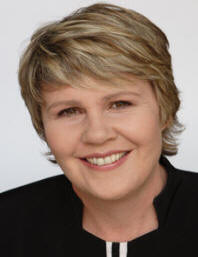
Fran Kelly
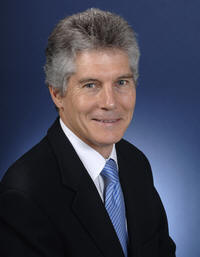
Hon Stephen Smith
Transcript of Australian Foreign Minister Stephen Smith’s Interview with Radio National Breakfast
(Hon Stephen Smith just back from a tour of Pakistan. Sada-e-Watan believed that Australian FM 3 days official visit will help promote Pakistan & Australia Friendship)
FRAN KELLY: Well as we've been hearing this morning on AM, Defence Minister Joel Fitzgibbon says that Australia has not been asked to send more troops to Afghanistan following that overnight NATO meeting in Poland.
But Foreign Minister, Stephen Smith says that at some point in this war, there has to be, quote, political dialogue between the political players in Afghanistan. Australia's Foreign Minister, Stephen Smith, joins us now in our breakfast studio.
Minister, welcome.
STEPHEN SMITH: Thank you, Fran.
KELLY: Let’s take a look at the outcome of the NATO talks overnight. Australia's won some further military support in Afghanistan, some more helicopters and other sort. What's your reaction?
SMITH: Well we welcomed that. The United States Administration announced in the last couple of days an additional 17,000 troops to Afghanistan, together with other resources. Joel Fitzgibbon has been in conversation with Secretary of Defense Gates in Krakow. Some of those will be allocated to Oruzgan Province, including the air support that you've referred to. So that's a good thing. Our nearly 1,100 troops are in some of the most difficult and dangerous areas and it's clear that the additional support is required.
KELLY: You just returned from Pakistan where you met the leaders of that country. The president of Pakistan recently suggested that the Taliban has control of so much of his country that Pakistan's forced into a war for its own survival. That, in itself, is an acknowledgement that Pakistan has been losing the war against the Taliban and Al-Qaeda. Is that because of lack of will or lack of capacity?
SMITH: Well I think the very good thing about President Zardari acknowledging that publicly, and he said the same thing to me in our bilateral meeting, was that the penny has dropped, that this is not just now an insurgent or a terrorist or an extremist threat which exists on the Pakistan-Afghanistan border, which is a problem to Afghanistan itself. This is, you know, an existentialist threat to Pakistan itself and needs to be confronted and addressed as such.
So, we've got two problems so far as the Pakistan situation is concerned. One is we've got a very difficult border terrain and topography where the insurgents from Afghanistan have been seeking refuge across that border, and that clearly needs to be stopped and addressed. But it's now the case clearly that Pakistan itself has very difficult problems. That's one of the reasons Australia became one of the Friends of a Democratic Pakistan, to help give Pakistan both the economic support and the military support, the counter-terrorism support and the development assistance or the civil construction support to combat that difficulty.
KELLY: In terms of the level of support we're giving, the terrorism support, is that of the same order that we contributed to Indonesia after the Bail bombings, which was quite significant, I think we helped establish a school of...
SMITH: Well in terms of development assistance, Indonesia is our largest, single development assistance partner. And one of the main aspects of that development assistance program is a basic education program where we fund the building of, currently, about 2,000 schools in Indonesia. So that’s our biggest individual partner country so far as development assistance is concerned.
In Pakistan when I was there, I announced a range of additional measures we'd be taking, including a substantial increase of our development assistance from about $30 million to in the order of about $60 million. Some of that goes to the difficult areas, that North West Frontier Province and the so-called Federally Administered Tribal Areas, which are on the Afghanistan-Pakistan border and that's where the difficulty comes in terms of border crossings between Afghanistan and Pakistan.
KELLY: You went to the border. You went to the Khyber Pass. What did you see?
SMITH: Well I flew in a helicopter to Peshawar and from there up the Khyber Pass, landed at the Khyber Rifles Fort and spoke to the people on the ground. A number of things came out of that trip. One, you get a very good appreciation of the difficulty of the topography, the difficulty of the terrain, but also how easy it is to effect border crossings there.
In some respects, more importantly, I got a very good appreciation of the history and the culture of the movements across that border from the various tribes, and from their perspective the artificiality of the border effectively created by the British.
But what has become clear – and this has also acknowledged now by the Pakistanis – that there has to be complete and proper co-ordination between what the Pakistanis do on their side of the border, together with the Afghanistan Government and the international force to get the co-ordination going there. There are some good signs in a difficult situation. President Zardari has made a point of involving President Karzai from Afghanistan closely. It was his first overseas visit. President Karzai's due to go back to Pakistan shortly. So we're starting to better co-ordinate between those two nation states and the international force itself.
KELLY: With respect, you're sounding as though the light's suddenly switched in Pakistan's leadership which is a few years too late, and many billions of dollars worth of aid too late isn't it? We're supposed to be doing this job for a long time?
SMITH: For the last 12 months we've been saying, the Australian Government's been saying, there is an acute problem in the Afghanistan-Pakistan border area that has adverse implications for Afghanistan.
In the course of last year, we also started to say we believe we have a serious problem in Pakistan which needs to be addressed. That's now acknowledged and appreciated by the international community, just as it is by Pakistan. That's one of the reasons, for example, why Ambassador Holbrooke was appointed by President Obama to be an envoy, not just for Afghanistan, but for Pakistan and Afghanistan. These two countries need to be treated together and at the same time, but the Pakistan problem is not just a problem that relates to the Afghanistan border and that's now clearly appreciated by Pakistan and in my conversations with my counterpart, Foreign Minister Qureshi or the Chief of the Armed Forces, General Kayani. They have a very clear understanding of that and know that it needs to be addressed.
Pakistan also has very substantial economic problems and that has to be addressed as well. And my counterpart, Qureshi, essentially says that Pakistan will only live in peace and security if its fundamental economic problems are addressed and the peace and security issues are addressed as well, and I strongly believe that's right.
KELLY: Last night, you seemed to agree with others who are describing the situation in Afghanistan as a stalemate. You also said, at some point in the cycle, there has to be a political dialogue between the political players in Afghanistan. Are you suggesting - are you calling for Taliban to be included in political discussions? Do we need to start talking directly to the Taliban?
SMITH: Well we can't be talking to the extremists and the terrorists who are interested only in imposing their will by force of arms. But it's quite clear that there are people who have been attracted to various terrorist groups because they see no other course of conduct or no other role.
The point I've been making is, whether it's Afghanistan or Pakistan, you can't win these issues by military force alone. It has to be a combination of three things. Enforcement actions against terrorists and extremists who only want to impose their will by force of arms. You've also got to make sure that you have, at the same time, a civilian reconstruction or nation building or capacity building approach so that people can see that there is improvement in their country. And thirdly, at some stage you've got to see a political dialogue between the political players and the political parties in a particular country, whether it's - as in this case we're talking about - Afghanistan. And so...
KELLY: Which includes the Taliban?
SMITH: Well our position's always been you can't have a conversation with people who only want to impose their will by force of arms, but we know that there are plenty of people who live in poverty, who have difficult circumstances, who are superficially attracted to that cause because they see no other way. A political dialogue helps them see another way, as civil reconstruction does.
KELLY: Minister, we're almost out of time. Can I just ask you briefly, as Foreign Minister, your view if America does invite us to contribute more troops, they haven't yet, but if they do, can we afford diplomatically to say no, in terms of the alliance?
SMITH: Well we haven't been asked. If we are asked, we'll obviously give that very serious consideration, but it has to be in the context of the overarching strategic review which is being done, the so-called Riedel Review which is taking into account Ambassador Holbrooke's work, General Petraeus' work. We have to see that over-arching strategic review. And we have to see other people doing more. An additional contribution by Australia can't be used as an excuse by other countries not to put their shoulder to the wheel as well. We are already the largest non-NATO contributor and we believe we're making a substantial contribution on the military side. We've also made it clear we are very happy to contemplate additional civil reconstruction or nation-building or capacity-building contribution.
KELLY: Foreign Minister, thank you very much for joining us.
SMITH: Thanks Fran, thanks very much.
KELLY: Stephen Smith is the Foreign Minister joining us in our breakfast studio just back from a tour of Pakistan where he met their country's leadership.